

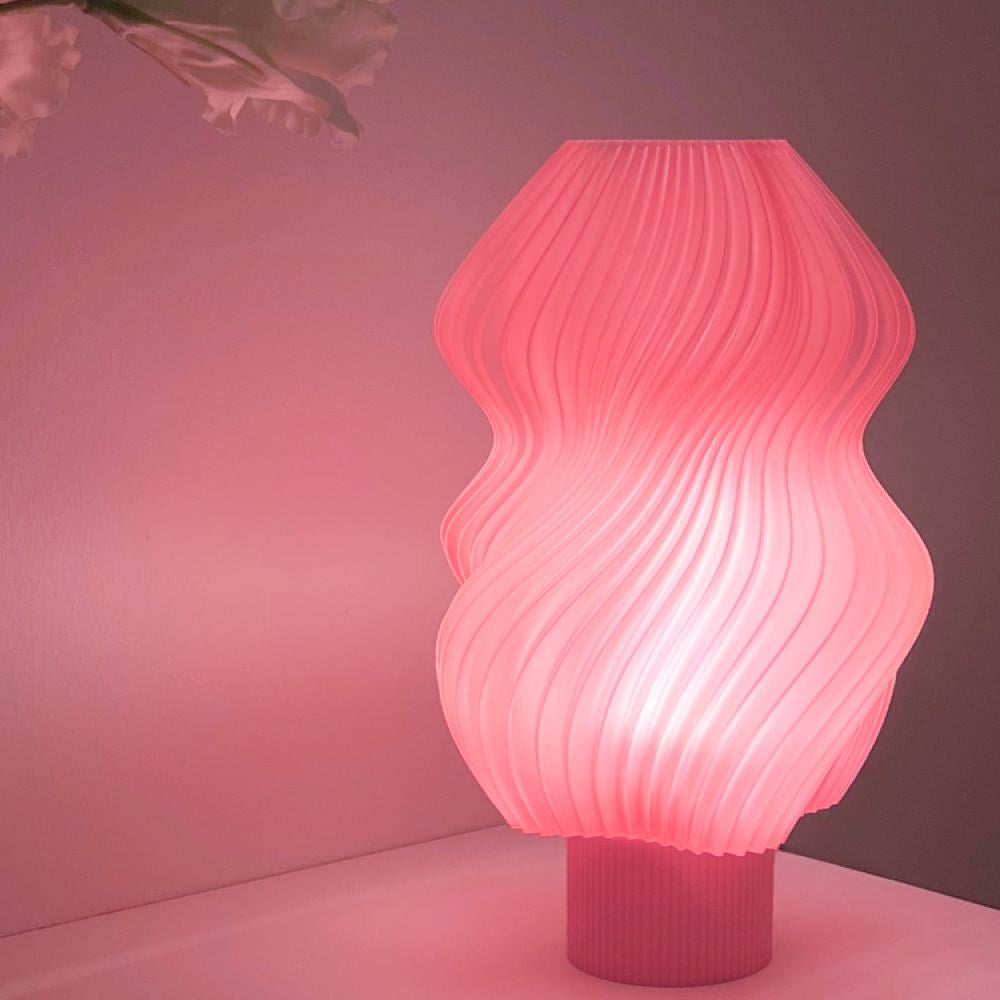
The 3D Printed Lighting Revolution
- What is 3D printing?
3D printing is a manufacturing process used to generate physical objects from digital designs. These objects are created by adding successive layers of materials, such as plastic, metal, or polymers. This type of manufacturing is used in a variety of industries, including medicine, architecture, and art, providing innovative and effective solutions.
3D printing began in the 1980s as a technology primarily used for prototyping, relying on techniques such as stereolithography (SLA) and fused deposition modeling (FDM). At that time, the technology was expensive, limiting its use, and was primarily used in large industries.
As technology advances and materials evolve, 3D printing has become more accessible and affordable. Today, this technology is used in a variety of fields, such as medicine (for prosthetics), architecture (for building design), and art (for creating innovative works of art). Thanks to declining printing costs and advanced software, this technology has become accessible to individuals and small businesses.
- 3D Printing in the Past: From Idea to Reality
3D printing began as a futuristic dream, relegated to science fiction. Back then, the process was expensive and complex, limiting its reach. Over time, however, with advances in technology and the development of materials and software, the technology has become more accessible. Now, individuals and small businesses can access this technology to manufacture custom products.
- The Future of 3D Printing: Towards New Horizons
Today, we expect 3D printing technology to continue expanding in the near future. Thanks to ongoing innovation, 3D printers are increasingly capable of producing products in larger sizes, using more diverse materials, and with greater speed and efficiency. We'll see more applications in fields such as construction, healthcare, and even food, revolutionizing how goods and services are produced.
- 3D Printed Lighting Revolution
One of the most promising applications of 3D printing is in the field of lighting. Completely customized lamps can now be designed and manufactured using this technology, allowing designers tremendous creative flexibility. Consumers can print lampshades tailored to their needs, whether in terms of shape, size, or even the image printed on them. Furthermore, the innovative design enables the integration of advanced lighting technologies with 3D printing, such as torch-inspired lighting or remote-controllable smart lighting.
- 3D Printing Uses in Lighting: Creativity Without Limits
3D printing opens new doors for designers and consumers alike. Thanks to this technology, manufacturers can now offer uniquely designed lamps at affordable prices and in a short time. From wall lamps to chandeliers, there are endless possibilities for creating bold new lighting styles. This technology is not just about aesthetics; it's also about efficiency and sustainability, as eco-friendly materials can be used and waste in the manufacturing process is minimized.
3D printing is completely changing the concept of lighting, opening the door to innovative and unique designs. With this technology, the future of lighting will be more creative and efficient.